

Motherhood & Madness: Becoming a Mother and Losing My Own
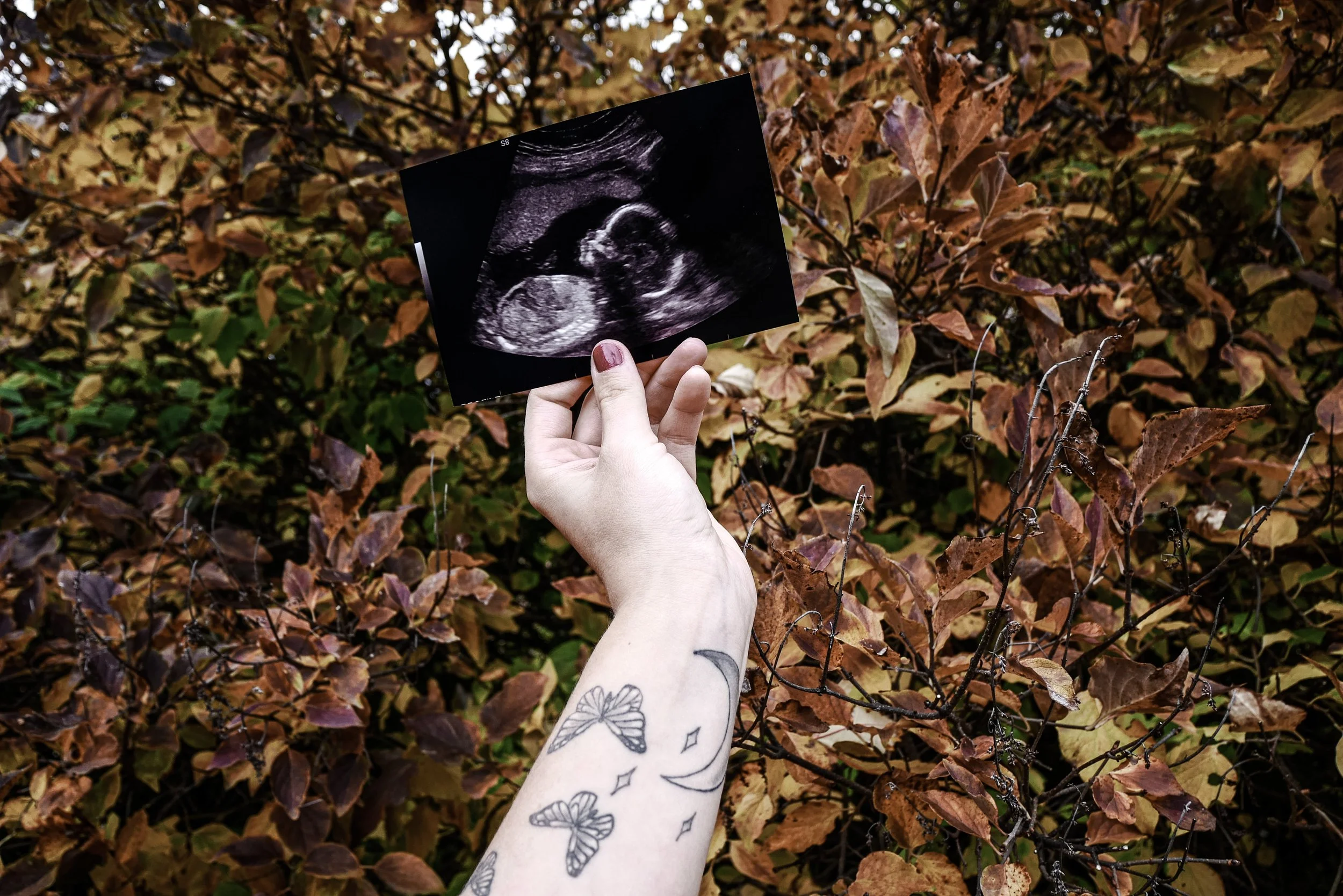
Originally published on May 9, 2021; edited and republished November 2021
A mother scurried throughout the house, her phone wedged between her shoulder and cheek as she spoke with her mom who worriedly asked, “Are you sure everything is okay?” Although nothing felt okay those days, the mother replied, “Yes,” antsy to say goodbye so she could get back to cleaning with the small amount of time she had while her five-month-old daughter napped. Their conversations were usually had out of perceived obligation, and often short-lived anyway.
A woman laid in bed, hair pulled back into a French braid to avoid creating a greasy, matted mess as she hadn’t moved much in weeks. She set her phone down and rested her eyes, daydreaming about life and spending Christmas with her husband, kids and grandkids next week — her favorite holiday. I’ll be home soon, just like we’ve all hoped and prayed, the woman thought as she drifted to sleep.
A few days later, the mother’s phone rang — her mom again. She answered despite not wanting to and was greeted by silence on the other line. Must have called by accident, she wondered, slightly annoyed by the interruption.
The woman, in her dazed and confused state, just wanted to hear her youngest daughter’s voice…one last time.
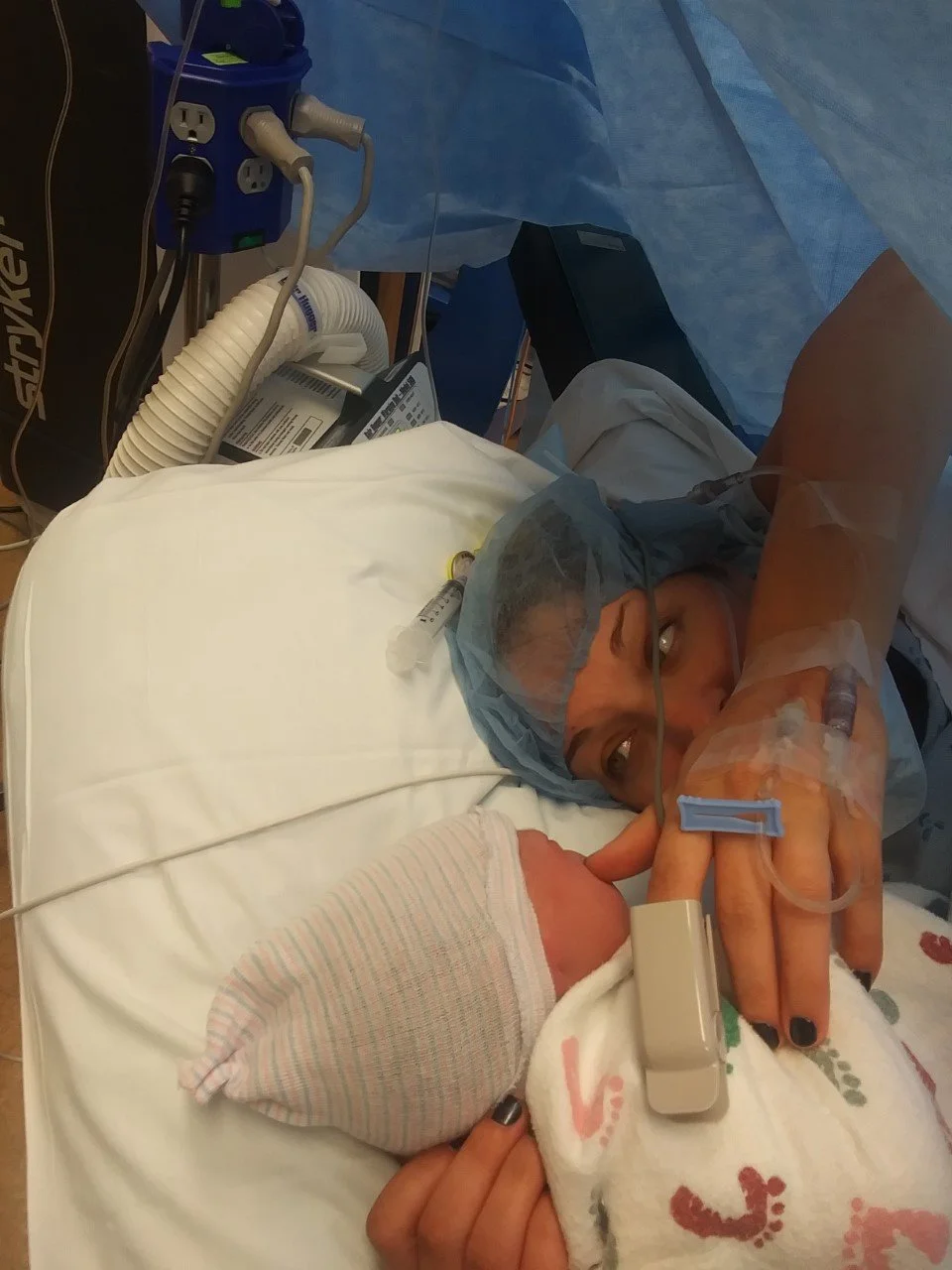
It’s no secret that 2020 was an interesting year for many. It never ceased to surprise me at every turn of a new week or month. I spent the later half of my pregnancy quarantined and shut off from the world, which I know isn’t unique to me because millions of others did, too. In July, my husband and I celebrated the birth of our first child — an adorable and spunky daughter — then soon after, I slowly spiraled attempting to adjust to motherhood and at the same time managing a few extra stressful situations with our business.
As if 2020 felt the need to go out with an extra painful punch to the gut, following a two-week battle with The Rona (on top of a handful of general lung and health issues), my mom passed away, the week before Christmas, the funeral the week of.
A month later — the turn of a new year, a fresh start — the last bit of sanity I had turned to dust and blew far away.
I’d felt my fair share of anger and anxiety through the early sleepless days and nights, pain from being cut open after thirty-one hours of induced labor, and daily stresses of being a parent to a newborn, but this was different. Every other day became filled with seething rage and meltdowns; crying and screaming into towels or pillows; punching walls and finally throwing a bottle at the kitchen window, shattering it. Thoughts of harming myself or my little one popped into my mind several times a week, to the point where I laid sobbing beside her on the playmat, planning my escape from this new hell. Wait until my husband is on his way home so baby isn’t alone too long, grab one of the guns and load it, go to the basement and shoot myself (it’ll be easier to clean down there.)
Every time I looked at my little girl that day, I cursed myself for exposing her to such insanity; she didn’t deserve a crazy, unstable mother, yet I knew the damage that could be done by abandoning her as well. Damned if I do, damned if I don’t. I obsessed over articles about mothers who commit suicide — the ones who survived an attempt, and the stories of the families affected by it — trying to make sense of it all, in hopes of validating my desire to go. Then another thought crept into my mind, silly but true: my year-old life insurance policy wouldn’t pay out for death by suicide…I’d have to hold on for another year. I couldn’t leave them with nothing.
I also couldn’t go on that way…things had to change. But how? I felt so lost, uncertain and alone.
Most would say it was loss and grief that made me break, but I came to realize it was the buried and unfelt pain of the past with my mom, coming alive as a present reality for me as a mother to my little one; a generations-old cycle that was so close to being carried on by the one person who always swore she’d break it with awareness alone. It felt like, although she was gone, my mom was haunting me, forcing me to be her so I would understand why she was the way she was. But as a person who doesn’t believe in ghosts and spirits, I knew there had to be a more sensical explanation for my newfound madness.
I’ll forever be grateful for rediscovering the works of Alice Miller, who helped me gain clarity during those murky days. I began with a book I’d read a few years prior, The Drama of the Gifted Child, which read much differently the second time, having a child of my own now. After quickly finishing that, I moved on to The Body Never Lies: The Lingering Effects of Hurtful Parenting, which refutes the Catholic Fourth Commandment, Honor thy father and thy mother. Her ideas and findings about the effects of early childhood were relatable; they allowed me to shine a light on my repressed and suppressed memories from long ago, to understand myself better as a woman and as a new mother.
If the child must risk losing the mother's love in order to feel, then she will repress her emotions. She cannot even experience them secretly for herself; she will fail to experience them at all. But they will nevertheless stay in her body, in her cells, stored up as information that can be triggered by a later event.
— ALICE MILLER, THE DRAMA OF THE GIFTED CHILD
The instability and insecurity that radiated from my mom throughout childhood, and her unspoken order for me to push all my feelings and needs down so not to upset her further, were finally exploding out of me as vengeful bullets finding their way to my own daughter. The impatience and wrath aimed at me, just for being a child, pulsed through me and my baby girl transformed into the inconvenient burden that I felt I was to my own mother. But she isn’t an inconvenience at all — she knows no better than to want and need her mom in this new, scary life as a tiny and dependent human. And I need to fully be there, be her mother: a safe person to always go when she needs.
I believe it was the event of my mom’s death that triggered this necessary breakdown within me, for without it I might have never come to confront the pains of the past, and therefore learn how to mother my own child in a better way, much different from the generations before me: with patience and understanding, knowing that I brought her here and it’s my duty to care for and guide her through life, not to control her into becoming a well-behaved trophy for me to parade around at times that are convenient for me.

She finally flew into a rage...finally able to admit to the extreme anger at her parents that had been pent up inside her for thirty years. And then a miraculous thing happened...in the space of a few days, her daughter started to play normally, lost all her symptoms...it was as if the mother had emerged from a dense fog and was seeing her daughter properly for the first time.
— ALICE MILLER, THE BODY NEVER LIES
Alice Miller’s books also helped feel at ease about not grieving the loss of my mom the way that others have. In no way am I saying that her death wasn’t tragic to our family, especially my dad, and that I wasn’t sad when she died (plenty of tears were shed the night she took her last breath and the day of her funeral), but I can openly admit that while it is indeed sad that she’s gone, I don’t often miss her and there is no use in trying to convince myself to feel otherwise just because society says I should. I tried searching for and filling my head with fond memories of her, to remember her as the wonderful woman I forced myself to write about in her obituary, but something inside of me didn’t feel right about that. How do you miss someone who was never really there for you?
I cannot force myself to love or honor my parents if my body rebels against such an endeavor for reasons that are well-known to it. But if I still attempt to obey the fourth commandment, then the upshot will be the kind of stress that is invariably involved when I demand the impossible of myself. This kind of stress has accompanied me almost all my life.
— ALICE MILLER, THE BODY NEVER LIES
Before I’m accused of being heartless and ungrateful, hear me out! There is a particular way society pictures grieving the loss of loved ones, and I felt extremely guilty and confounded for not looking and feeling that way, like there must be something wrong with me! My sisters have told me how they cry when something reminds them of her, but no tears blur the image of a lighthouse or butterfly when I see one. I think of her often, but the memory of her doesn’t tug at my heart and fill me with grief, it’s just a memory. The loss of a life is awful indeed, especially in the way my mom lost hers — alone in a hospital for two weeks, suffocating, only strangers in masks to keep her company. That to me was the saddest part of it all…but to me it was a sort of symbolism for her life in ways: alone — by her doing and denial of doing so.
After going through boxes and digital folders of hundreds of photos, I realized how little were of my mom and I, especially during childhood/adolescence. The one shown is from my senior photo session, which was forced by the photographer.
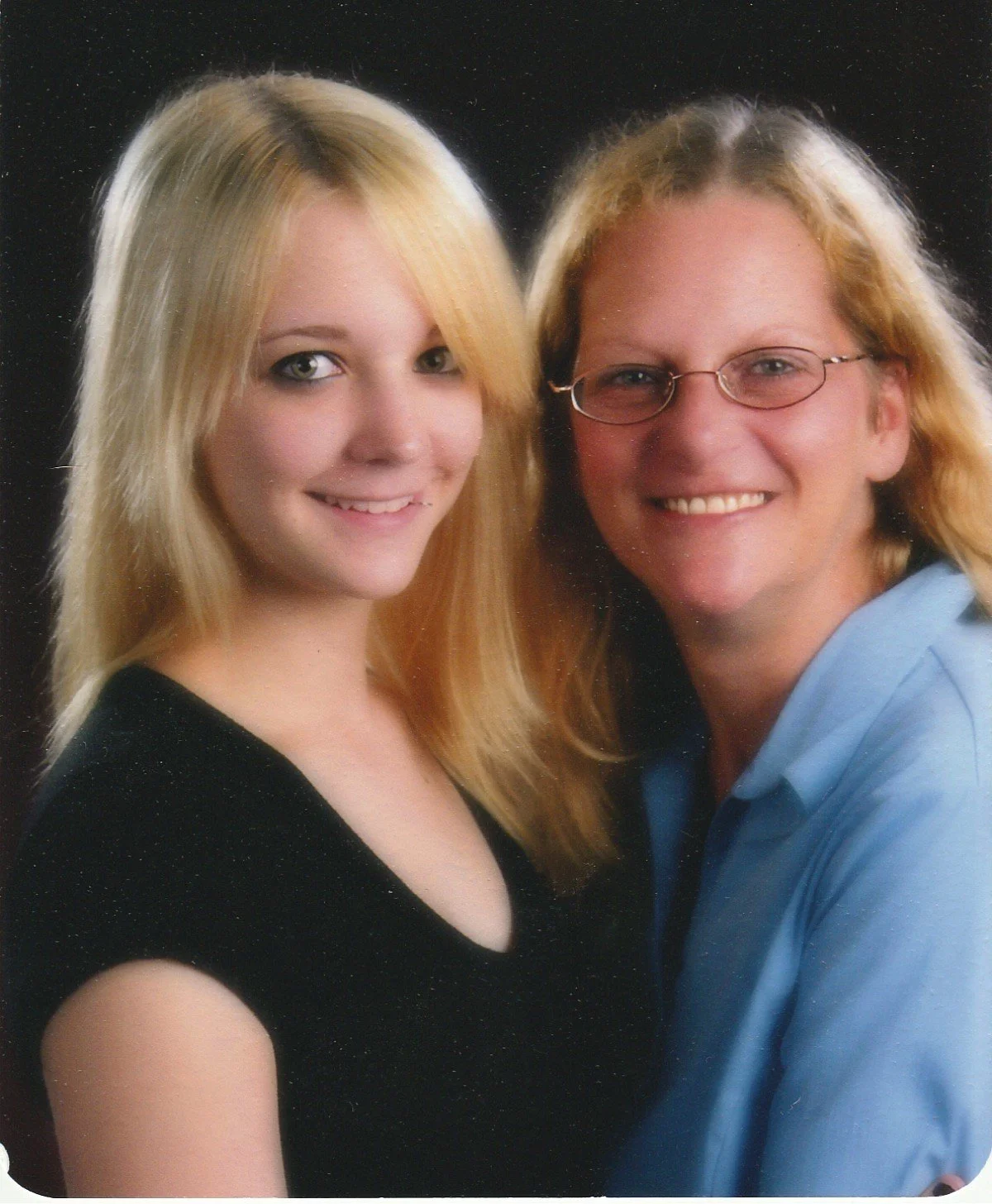
She gave me life, but rarely showed me good examples of how to live it, rather she spewed negative thoughts and opinions at me when I wanted to do well for myself and have dreams. It took me forever to feel confident in my writing because of her smashing my dream of being a writer when I was thirteen, saying “it costs too much” (???) I needed her support and guidance when I was young and was met with a cold shoulder for years, yet she desperately wondered why she received my cold shoulder when she was finally “ready” to be present. But was she? I made attempts in recent years to try connecting with her, to build the relationship that never was.
One afternoon, not long after I moved home from Minnesota, I invited my mom to grab coffee. We sat across from each other awkwardly (conversations didn’t flow easily between us), then she slowly opened up as I asked her about her childhood, her first marriage, how she and my dad got together. I wanted to understand her life up to that point, to figure out why my siblings and I were treated the way we were. It makes perfect sense knowing what I do, but she also had the power to recognize the flaws in her parents and do things differently with her own children.
Another day a year or two later, she called me, frantic and bawling because my youngest brother was at an in-patient facility for threatening to commit suicide the night before. I skipped work that morning and went over to her house to talk her through it. She blamed herself for being a shitty mother. Normally I would respond to her pitiful pleas for kind affirmations with uplifting lies, but that morning I scraped the surface of how she often let my siblings and I down as a mother. It seemed as if a lightbulb went off, like she was seeing the world with a fresh perspective and knew it was finally time to get her ass off the computer chair and be present in our lives. She even apologized to my oldest sister that afternoon — hooray! An apology to me though? Skipped that one. Did she get off her ass and start making life happen? Sadly, she didn’t.
It takes two to build or repair a relationship, and she gave little effort until it was too late.
The story at the beginning is true from my side of things, but who knows if when she called she just wanted to hear my voice; she was drugged up and loopy those last days before the ventilator. I worried that I’d be tormented by guilt for not calling or texting her as much as everyone else while she was in the hospital. How terrible of me for being annoyed by her attempts to talk to me during her last days! But what do I owe someone who treated me as an annoyance throughout much of my young life; who wasn’t there when I needed her to be because her needs and computer games were more important?
Of course we had our good times, she had some admirable qualities as well — she wasn’t one-hundred percent a terrible mom — but they don’t come close to outweighing the not-so-good ones. It’s taken me a long time to heal from the damage done, and it didn’t happen by placing her on a pedestal just because she gave me life, nor because she’s no longer with us. Many will do that when a parent dies; I see some of my siblings do it all the time now, despite how much they complained to me about her while she was alive. Denial is only comfortable for so long until you begin to feel the deeply-rooted effects of your history and cannot figure out what’s wrong…
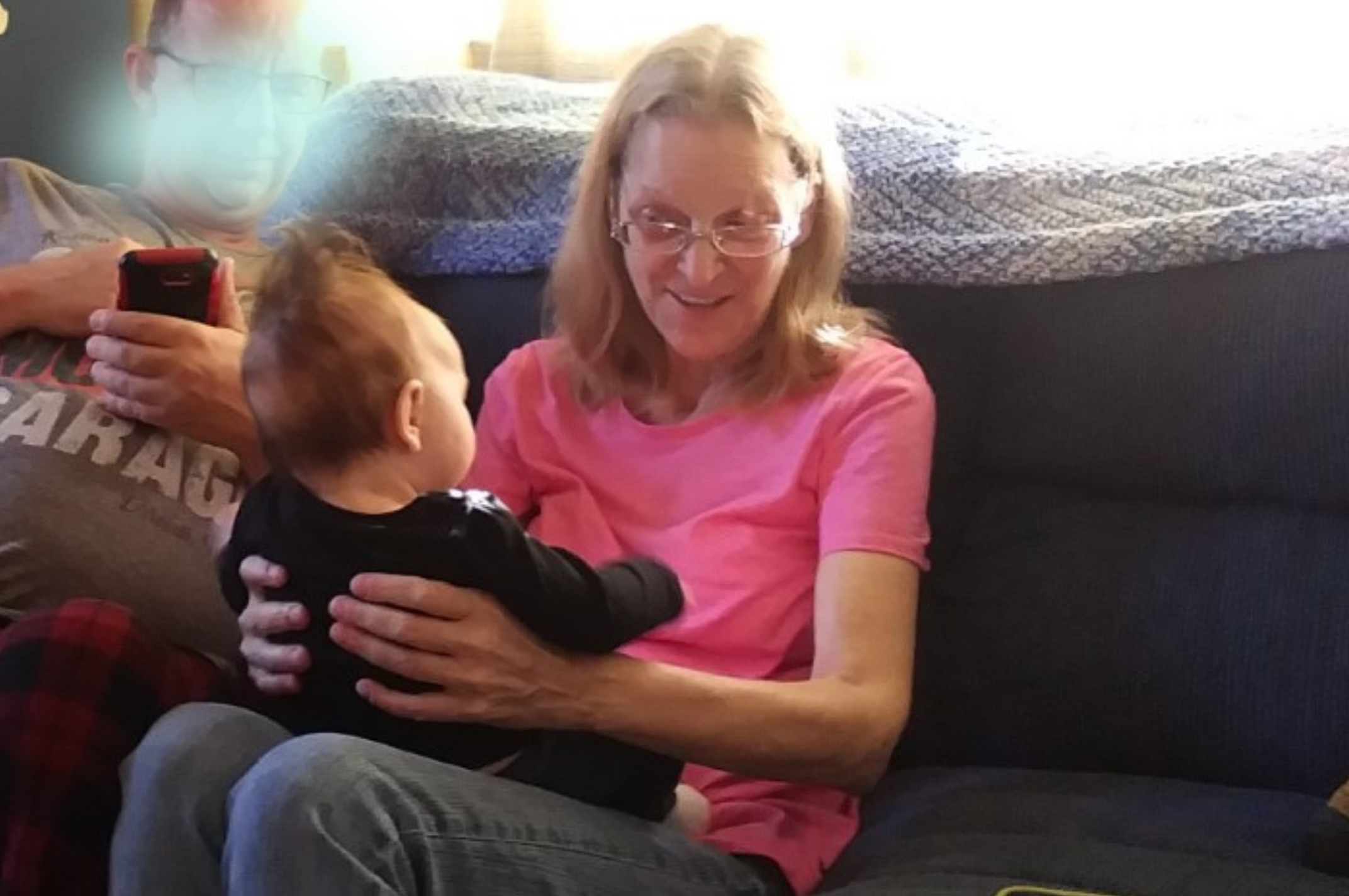
One month and two weeks before she passed away, I visited home on a whim. It was the last time we saw her alive, the last time she got to hold her youngest grandchild.
In my mom’s obituary I wrote, “Her favorite saying was, ‘Everything happens for a reason,’ and while the reason for her leaving so soon may not be known now, the memories of her enormous heart, quirky personality, and beautiful, radiant smile will carry everyone through these grievous times. It’s no wonder why Karrie loved lighthouses, as she will remain a constant light in her friends’ and family’s lives, even on the darkest days and nights; a light that will someday shine bright a reason for this heartbreaking loss.” It’s true that we all find our own meanings in the death of loved ones, and ironically it was my emotionally absent mother that has thus far helped me be the mother I wished I had so long ago. Most of us try to do our best as parents. I understand that she only passed along what she knew, but that doesn’t make it okay because I know now there was another way.
Little gyiiirrrl, my bright and smiley moon…you are the true light in my life, especially when it seems so dark. Because of you (and your Pop-Pop, haha!) I am a mother, and I will do everything in my power to be there for you, to guide you as you grow and navigate this life. I won’t ever be perfect, but I will be my best.
Happy Mother’s Day to all the other mamas out there doing their best to give their little ones more than they were given!
Do you relate?
Care to share?
Comment below and let your truths set you free...